
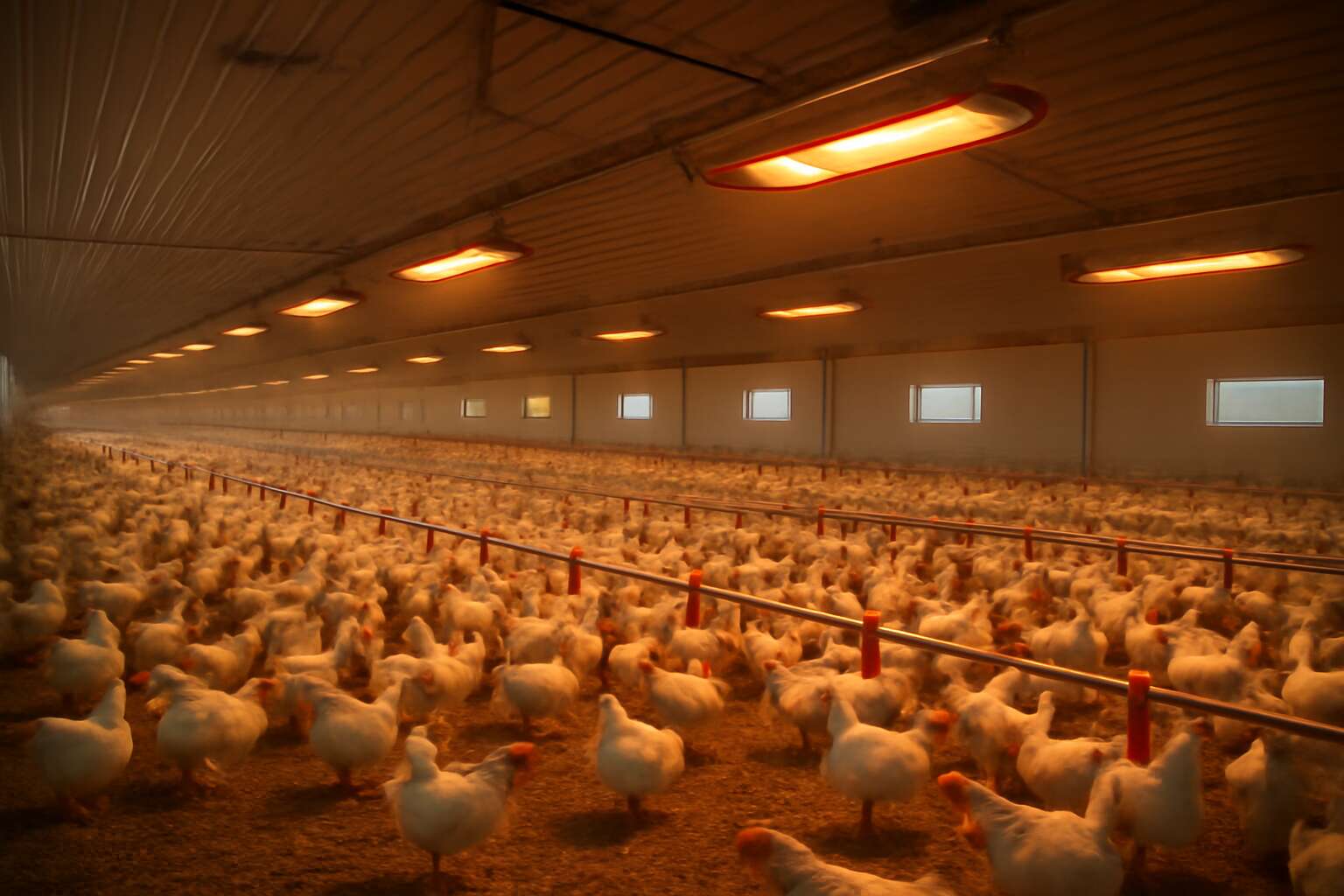
Poultry House Heating Fundamentals
Key heating goals for poultry houses
In South Africa, a cold snap can shave growth in day-old chicks by up to 15% when heating falters. Temperature stability is the top daily KPI in a poultry house, and a reliable poultry farm heater keeps birds thriving through the chill.
Key heating goals include:
- Uniform temperature across the house to prevent hot or cold pockets
- Rapid recovery after door openings and feeding to keep birds comfortable
- Energy efficiency that lowers bills without sacrificing growth or welfare
Beyond the goals, layout and controls matter. Insulation, curtain management, and smart sensors balance heat with ventilation, while zoning focuses warmth where it’s needed most. Regular system checks keep performance steady as the season shifts.
Heat distribution in intensive vs. free-range setups
Heat distribution in a poultry house can feel almost supernatural—like a whisper guiding every feather. In South Africa, a cold snap can shave growth in day-old chicks by up to 15% when heating falters, underscoring the weight of uniform warmth.
Intensive setups concentrate heat to create tight microclimates, while free-range layouts rely on broader air flow and more space for birds to roam. The result is different heat needs and different risks for pockets of cold air.
- Intensive housing features higher heat density and localized warm zones.
- Free-range environments rely on broader airflow, demanding more even distribution.
- In both, zoning and curtain management shape where warmth concentrates.
Choosing the right poultry farm heater and the right balance of zoning and curtains changes the game as weather shifts. Birds feel the difference in the barn’s quiet heartbeat.
Common heating methods overview
Heat is life for the flock, a quiet force that keeps day-old chicks alive as dawn crawls over the wire mesh in South Africa.
Here are the common heating methods that underpin a reliable poultry house, each chosen for reliability, energy use, and ease of control.
- Radiant systems deliver heat directly to birds, reducing air movement and drafts.
- Forced-air heaters blend with ventilation to spread warm air evenly.
- Underfloor or panel-based radiant options create consistent warmth without loud fans.
When you talk to contractors, a thoughtful poultry farm heater plan must pair with house design and airflow control to balance energy and comfort.
Climate control and ventilation interactions
Heat is the heartbeat of a successful flock, and in South Africa’s varied climates, steady warmth can feel almost supernatural at dawn. Climate control and ventilation don’t fight each other; they dance a balance that keeps air fresh while warmth lingers where birds gather.
For a poultry farm heater to perform, it must mesh with house design and airflow control. The key interactions are subtle: temperature stability, humidity, and air exchange.
- Airflow patterns steer heat to where birds need it
- Humidity control preserves comfort and respiratory health
- Ventilation rate affects energy use and litter quality
A well-chosen system aligns with the barn’s layout and season, reducing stress on the flock and on energy bills.
Seasonal heating considerations
Across South Africa’s varied climate, warmth is the heartbeat of the flock, and a trusted poultry farm heater makes that heartbeat steady. As one manager puts it, “Warmth is the heartbeat of the flock.” In winter, steady warmth translates to consistent growth and better feed efficiency. Warmth, after all, is as much a social contract as a technical requirement.
Fundamentals for seasonal heating mean the heater must mesh with the house design and airflow. Temperature stability, humidity, and air exchange weave together to keep birds comfortable as daylight shifts and nights lengthen.
- Seasonal temperature swings
- Humidity and litter dry-out
- Ventilation rate vs. heat demand
This alignment reduces stress on the flock while keeping energy use in check, especially for farmers relying on a robust poultry farm heater to weather South Africa’s seasonal moods.
Types of Heaters for Poultry Houses
Gas-powered heaters and safety features
Heat is the heartbeat of a flock, turning a chilly dawn into steady growth. A reliable poultry farm heater acts as a patient clockmaker, delivering warmth with quiet precision. In South Africa’s farms, gas-powered warmth can be swift, economical, and dependable when paired with thoughtful safety.
Gas-powered heaters come in several flavors to fit different coops and budgets:
- Direct-vent wall units
- Radiant-tube burners
- Fan-assisted radiant heaters
Safety features act as a shield: automatic shutoffs, flame safeguards, carbon monoxide detectors, and proper venting. For a dependable poultry farm heater, clearances from walls and bedding are non-negotiable, and regular maintenance keeps the system calm and dependable, even in power fluctuations SA farms may endure.
Oil-fired options and maintenance
In SA’s chilly dawns, oil-fired options can become the steady pulse behind a healthy flock. A reliable poultry farm heater powered by oil offers uptime when electricity is unreliable or fuel price fluctuations bite—resilience in its purest form!
Oil-fired choices include:
- Oil-fired forced-air units for even heat distribution across sheds
- Oil-fired radiant burners for targeted warmth in smaller spaces
- Boiler-based oil systems to centralize heat for multiple coops
Maintenance matters; burners benefit from periodic professional tune-ups, venting integrity, and prudent fuel management. A well-kept system remains calm, even as power costs swing. This is how a poultry farm heater stays reliable in SA’s changing climate.
Electric infrared and radiant heaters
Electric infrared and radiant heaters prove that the poultry farm heater can be quiet, clean, and surprisingly efficient. They shine—targeted warmth to birds and litter with minimal energy waste, no combustion byproducts, and none of the noise that plagues old ducted systems. They respond quickly to chilly SA dawns, carving out comfortable zones across sheds.
In this category, electric infrared and radiant systems excel for clean air and predictable warmth. Here are the standout benefits:
- Direct radiant heat that warms birds and litter, not just air
- Minimal moving parts and simple mounting
- Fast response to temperature dips
- Easy integration with existing climate-control setups
For SA farmers juggling grid reliability and climate quirks, these options bring a reassuring hum to the coop—no smoke, no fuss.
Brooder and brood chamber heaters for early life stages
Chicks hatch into a world where heat is the quiet governor of growth. In South Africa’s sheds, a steady poultry farm heater for brooders becomes the unsung heartbeat of dawn-to-dusk care—holding a tight thermal band, stabilising humidity, and keeping litter dry even when the grid stumbles. From the first peep, the right warmth sets the pace for a uniform start, every chick’s comfort measured in quiet degrees.
Here are trusted configurations for brooders and brood chambers:
- Gas-fired brooders with thermostatic control for rapid, even warmth
- Oil-fired stoves designed for compact brood rooms with low maintenance
- Electric warm-air units that distribute gentle heat without bulk
These options redefine early-life warmth across SA, proving the heat you choose speaks softly but decisively.
Hybrid and backup heating systems
Heat isn’t loud, but it steers growth. In South Africa’s sheds, a well-tuned poultry farm heater anchors dawn-to-dusk care and turns cold snaps into manageable margins. Precise warmth can trim energy waste and keep chicks comfy, so each bird starts on an even footing!
A thoughtful poultry farm heater blends constant warmth with smart control. Hybrid and backup systems extend reliability beyond the grid and weather, offering resilience when power is stretched.
- Solar-assisted warm-air units for daytime load-sharing
- Biomass-fired back-ups that keep litter dry when outages loom
- Automatic electric-backup systems with smart switchover
In practice, choose configurations that match shed size, litter management, and ventilation. The goal is steady thermal bands, gentle humidity, and uncompromised comfort for every bird, rain or shed-stroke of wind.
Energy Efficiency and Cost Optimization
Insulation and building envelope improvements
Heat is money in a poultry house, and a well-tuned system begins with what you can’t see—the walls, roof, and the gaps around doors. In South Africa, where winters bite and energy costs climb, insulation and building envelope improvements quietly shave the need for extra fuel. A sturdy envelope keeps daytime warmth inside and seals out cold drafts, letting even a modest poultry farm heater do its job without shouting for help. In my years on the farm, I’ve watched warmth endure when the building’s skin is tended with quiet, practical care.
Here are broad ideas that fit the flow of a warm, efficient barn:
- Gaps and cracks highlight the importance of a tighter envelope and lower air infiltration.
- Roof and wall insulation demonstrates how materials influence temperature stability.
- Windbreaks and shading illustrate how site design shapes energy use.
Together, energy efficiency and cost optimization turn the barn into a steadier partner rather than a burden—honoring the birds and the people who tend them and the land they call home.
Thermostats, sensors, and smart controls
Heat is money in South Africa’s winter ledger, and a poultry farm heater doesn’t burn money—it saves it when paired with smart controls. The right thermostats and sensors keep temps stable, even through load-shedding and rising tariffs. That quiet efficiency adds up.
Thermostats, sensors, and smart controls tune energy use to actual needs. They monitor ambient temperature, bird age, and ventilation interactions and adjust heating without waste.
- Dynamic temperature setpoints matched to bird age and welfare goals
- Remote monitoring and alerts to catch sensor drift
- Automatic dampening to prevent overheating with drafts or sunlit days
Together, these systems turn fluctuating energy costs into predictable operating expenses, letting a modest poultry farm heater deliver dependable warmth without shouting for the wallet. The interplay with site design and ventilation remains crucial, but smart controls keep the birds and budgets in balance.
Preventing heat loss through drafts
Winter in South Africa writes its invoices in frost and fear, and energy bills rise like dark coins rattling in a tin. A poultry farm heater, properly tuned, keeps the coop warm without bleeding the till. When heat is guided by thoughtful design, savings glow quietly, and birds march to warmth with steady breaths. The right balance turns a volatile season into a measured rhythm—comfort for the flock and peace for the purse.
Drafts are invisible thieves; they creep through corners and widen the distance between heat and habit. By letting the environment harmonize with the heater, heat loss through drafts becomes a negotiable sound in the night rather than a haunting cry. A well-sited system can cast a durable, even hush of warmth that steadies energy use and tames the unpredictable tariffs.
Calculating ROI and payback periods
Winter tariffs in South Africa nip at margins, but a properly tuned poultry farm heater can flip the script. Energy bills gnaw at a farm’s bottom line, yet ROI boils down to two numbers: upfront investment and annual savings. When heat is used efficiently, that warm glow becomes a crown jewel on the ledger. A well-matched unit doesn’t just warm the coop; it steadies cash flow!
- Upfront cost of equipment and installation
- Projected annual energy savings
- Ongoing maintenance and replacement costs
- Financing terms and any available rebates
An example: spend R50,000 on equipment and installation. If annual savings run at about R18,000, the payback sits just under 3 years. After that, the annual saving streak is pure profit, barring maintenance surprises.
Beyond the payback, consider downtime, seasonal demand swings, and supplier warranties; the right setup locks in predictable energy use and steadier margins.
Fuel efficiency vs upfront costs
South Africa’s winter can turn a modest energy bill into a dramatic tale if your hen houses aren’t tuned for efficiency. A well-chosen poultry farm heater can swing the drama back in your favour, delivering warmth with less wattage and less pain to the purse. Fuel efficiency vs upfront costs isn’t a romance—it’s a stalemate that finally leans toward cash flow when the right unit is chosen.
Here’s how to weigh efficiency against upfront expense.
- Unit efficiency vs heat output
- Upfront install cost and disruption
- Estimated annual energy savings
- Warranty, service network, and parts
- Financing terms and rebates
Numbers don’t lie: the right balance turns heat into a quiet partner for the flock—or the ledger.
Installation, Safety, and Maintenance
Compliance with safety standards and regulations
Warmth is more than comfort on a farm; it’s performance. A properly installed poultry farm heater can steady night temperatures and curb waste. In South Africa, installation should follow manufacturer specs, be done by a licensed technician, and respect clearances from bedding and equipment to prevent hotspots and fire risks.
Safety first: certified installers, guards, and proper electrical protection form the backbone of any setup. Compliance with South Africa’s electrical regulations and industry best practices protects birds and workers, turning a heat source into a reliable ally rather than a hazard.
Maintenance and record-keeping seal the deal. Regular inspections, service histories, and adherence to evolving safety standards keep the poultry farm heater performing through seasons. When compliance is foregrounded, the coop breathes easier and the poultry farm heater stays resilient.
Electrical and ventilation considerations during installation
Heat is a quiet partner in poultry success; when it’s on target, the birds flourish, and when it isn’t, trouble multiplies. As one veteran farmer notes, warmth is a contract between keeper, system, and flock—honor it and growth follows.
During installation, electrical supply must match the poultry farm heater’s specifications, with careful clearance from litter and equipment and room for vented air to move. Good practice also means designing pathways for ventilation so humidity and heat don’t stagnate, keeping risks of hotspots low.
Safety and maintenance hinge on certified installers and solid electrical protection; keep service records, schedule periodic checks, and stay aligned with evolving South African standards. A well-maintained poultry farm heater becomes a trusted ally rather than a hazard, supporting birds and workers alike.
Routine maintenance schedules
Under the shed’s quiet hum, the poultry farm heater becomes a guardian of growth. A flawless installation is the difference between a flock that thrives and a building that creaks under mischief; I’ve seen vents choke and power cords betray warmth when alignment was ignored. When the supply matches the heater’s specs and clearances are respected, the air moves, the birds settle, and the days grow predictable.
Safety and maintenance hinge on certified installers and robust electrical protection; I insist on records that follow South Africa’s evolving standards. A well-tuned system is a trusted ally—quiet, invisible, and reliable—keeping both birds and workers in a calm, safe rhythm.
Routine maintenance schedules matter as much as the initial wiring. I watch for consistent performance, knowing a healthy poultry farm heater rewards careful, ongoing attention more than any single retrofit. Regular checks, kept with cadence, turn uncertainty into dependable warmth.
Emergency preparedness and fault troubleshooting
On a cold dawn, the quiet hum of a poultry farm heater becomes the difference between a thriving flock and a waning barn. Installation starts with exact placement, secure mounting, and respectful clearances, all handled by certified installers who follow South Africa’s evolving safety standards. When the unit is properly sized and aligned, warm air moves evenly and birds settle into routine.
Safety is the backbone: robust electrical protection, weatherproof enclosures, and trained staff who can shut down calmly if a fault flares. The right crew keeps records and tests so the poultry farm heater remains a quiet guardian, not a spark in the night.
Maintenance and fault troubleshooting are ongoing acts of care. Emergency preparedness means spare parts, clear access, and a tested shutdown routine.
- Verify power supply, circuit breakers, and fuses
- Check ducts, vents, seals for blockages, leaks
- Calibrate thermostats and sensor readings
Seasonal startup and shutdown procedures
Installing a heater is more commissioning than bolting a box to a wall. Thoughtful placement, airflow tuning, and service access ensure warm air circulates evenly across SA barns, even when daytime temps swing wildly. A qualified installer aligns components and runs a dry test so birds settle into routine.
Safety isn’t a slogan; it’s weekday behavior. Visible shutoffs, clear labeling, and trained staff who can flip the switch calmly keep people and birds safe. Regular safety audits and incident logs help the system stay a quiet guardian rather than a spark in the night.
Maintenance and seasonal startup/shutdown procedures keep the poultry farm heater dependable. A quick pre-season sweep—power, sensors, and seals—paired with thermostat calibration and airflow checks primes the system for transition months.
- Verify power supply, circuit breakers, and fuses
- Check ducts, vents, seals for blockages
- Calibrate thermostats and sensor readings

0 Comments